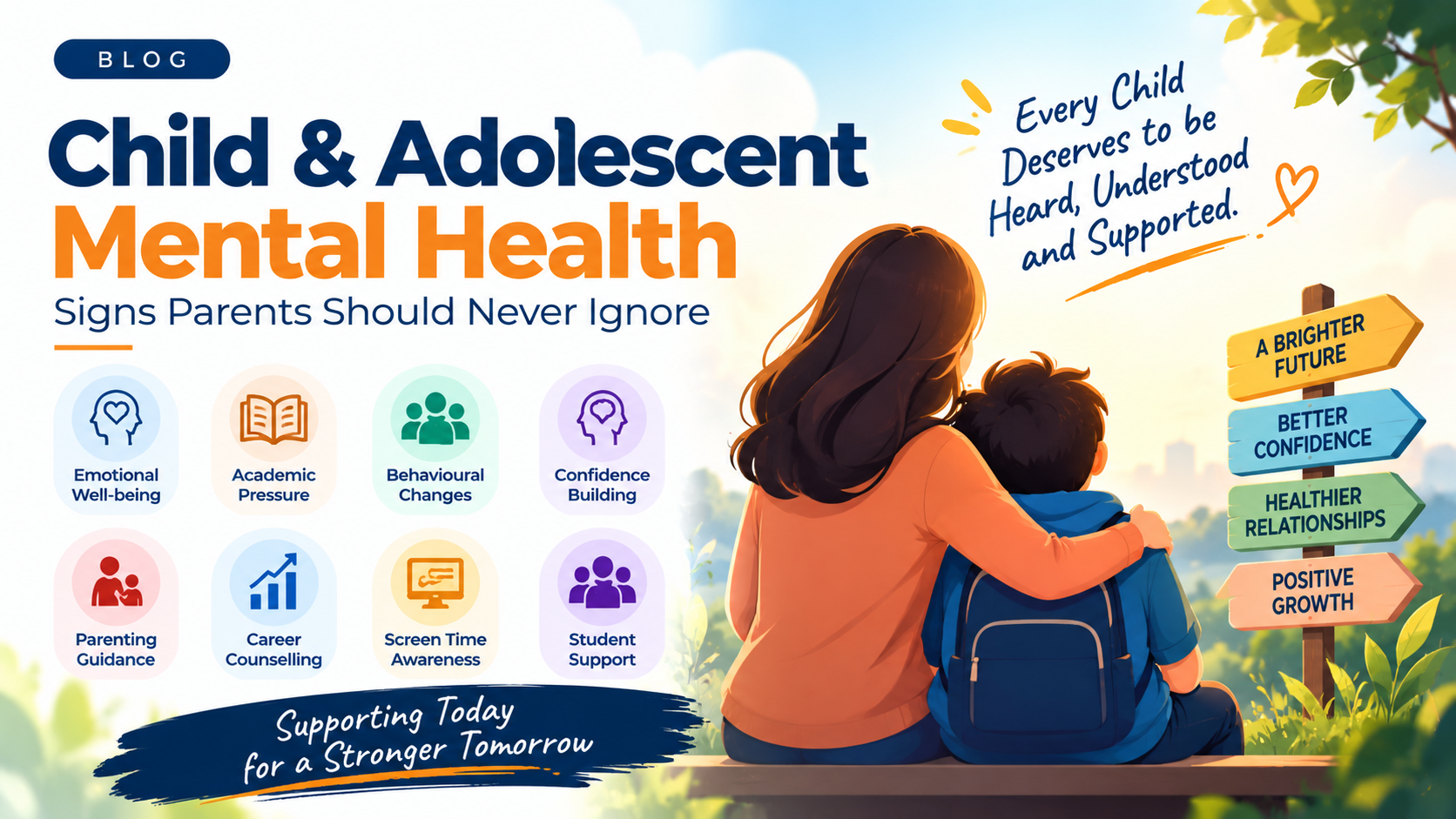
Childhood and adolescence are periods of significant emotional, social and psychological development.
Children and teenagers experience many changes while growing up. School pressure, examinations, friendships, family relationships, bullying, social expectations, excessive screen use and uncertainty about the future can sometimes become difficult to manage.
However, children do not always have the words to explain what they are feeling.
Instead of saying, “I am emotionally stressed,” a child may become unusually angry, withdrawn, fearful or uninterested in activities.
That is why parents need to pay attention not only to what children say, but also to changes in their behaviour.
Why Children's Mental Health Matters
WHO reports that around one in seven adolescents aged 10–19 experiences a mental health condition globally, with anxiety, depression and behavioural disorders among common concerns. World Health Organization
Mental health difficulties during childhood and adolescence can affect:
- Education
- Friendships
- Family relationships
- Confidence
- Emotional development
- Behaviour
- Future well-being
WHO also emphasizes that childhood and adolescence provide an important opportunity for early mental health support. World Health Organization
Common Signs Parents Should Notice
Every child is different, and one behavioural change does not automatically mean that a child has a mental health condition.
However, significant or persistent changes deserve attention.
1. Sudden Anger or Irritability
A child who becomes unusually aggressive, argumentative or easily irritated may be experiencing emotional stress.
2. Excessive Fear or Anxiety
Some children may become excessively worried about school, examinations, friendships, separation or everyday situations.
3. Withdrawal
If a previously active child suddenly avoids family members, friends or activities they previously enjoyed, it may be worth understanding what has changed.
4. Academic Changes
A sudden decline in academic performance, difficulty concentrating, loss of interest in studies or excessive fear around examinations may indicate emotional or academic pressure.
5. Sleep Problems
Changes in sleeping patterns can sometimes accompany stress or emotional difficulties. The American Psychological Association notes that stress in children and teenagers can show up through sleep difficulties and behavioural changes. American Psychological Association
6. Excessive Screen or Mobile Use
When screen use begins interfering with sleep, studies, family interaction or everyday responsibilities, parents may need to understand what is driving the behaviour rather than focusing only on restricting the device.
7. Low Confidence
Children may begin saying things such as:
- “I can't do it.”
- “I'm not good enough.”
- “Everyone is better than me.”
Consistent encouragement and appropriate guidance can help children develop healthier self-confidence.
Academic Pressure and Exam Stress
Students can experience considerable pressure around examinations, grades, competitive exams and expectations about their future.
Some stress can motivate a student, but prolonged or overwhelming stress can interfere with emotional well-being.
Parents can help by:
- Listening without immediately criticizing
- Avoiding constant comparisons
- Setting realistic expectations
- Encouraging healthy sleep
- Creating time for recreation
- Discussing concerns openly
- Seeking professional guidance when difficulties persist
The APA recommends healthy coping strategies for children and teenagers, including adequate sleep, physical activity and talking with a trusted adult. American Psychological Association
Parent-Child Communication Matters
Sometimes children do not need an immediate solution.
They first need someone who will listen.
Instead of asking:
“Why are you behaving like this?”
try:
“I have noticed that you seem different lately. Is something bothering you?”
A calm and supportive conversation can make it easier for a child to express emotions.
Parents can focus on:
Listen → Understand → Support → Guide
rather than immediately blaming or punishing.
How Child & Adolescent Counselling Can Help
At GMHCC, child and adolescent counselling may address concerns such as:
- Anger and aggression
- Anxiety and fear
- School refusal
- Exam stress
- Academic pressure
- Poor concentration
- Behavioural changes
- Low confidence
- Peer difficulties
- Parent-child conflicts
- Emotional regulation
- Excessive screen/mobile use
- Career confusion
- Autism/ADHD-related support and guidance
Parents can also receive guidance regarding communication, boundaries and creating a supportive home environment.
When Should Parents Seek Professional Help?
Consider seeking professional guidance when emotional or behavioural changes:
- Continue for a significant period
- Affect school performance
- Affect friendships or family relationships
- Interfere with everyday activities
- Become increasingly severe
- Cause significant distress
- Are difficult for parents to understand or manage
If there are immediate concerns about a child's safety, self-harm or suicidal thoughts, seek urgent professional/emergency support rather than relying only on routine counselling.
Final Thoughts
Children may not always know how to explain what they are experiencing.
Sometimes their behaviour is their way of communicating that something is wrong.
Instead of asking only:
“What is wrong with my child?”
we can also ask:
“What is my child trying to tell me?”
Early understanding, supportive parenting and appropriate professional guidance can make a meaningful difference.
Every child deserves to be heard, understood and supported.
Global Mental Health Counseling Center
Child & Adolescent Counselling • Parenting Guidance • Student Support
Reader Comments (0)
Leave a Comment
No comments yet. Be the first to share your thoughts!